
How to choose the right exercise method for yourself? Individual differences and walking for weight loss.
How to choose a suitable form of exercise?
Having recognized the importance of exercise, how to actively participate in it should be tailored to the individual, much like a doctor prescribing medication for a patient. Different prescriptions suit different patients, so the exercise methods for different groups should also differ. First, there's a wide age range. In my country, people over 60 are considered elderly. It's clearly inappropriate for middle-aged people or those aged 60-90 to use the same exercise program and intensity. Second, there are gender differences. Generally, men have better physical strength than women and should therefore exercise more. Third, there are differences in health conditions. Everyone's physical condition varies, even among people of the same age. Therefore, the choice of exercise programs, methods, and intensity should differ. Fourth, there are differences in occupation. Mental laborers should participate in more physical exercise than manual laborers. Manual laborers, due to the different nature of their work, experience imbalances in the development of various parts of their bodies and should adopt targeted exercise programs. Fifth, there are differences in the foundation of exercise. Some people have been exercising since childhood and have persisted for a long time; the exercise programs, methods, and intensity chosen by these individuals should also differ.
Besides individual differences, it's also important to consider body type. First, for those who are thin, have little body fat, weak muscles, and poor stamina, their internal organs are often also not very healthy. These individuals should gradually increase their stamina through activities like walking, brisk walking, and jogging, gradually strengthening muscle strength, endurance, and flexibility before moving on to strength training. Second, some people appear thin but have a high body fat percentage, often with poor muscle strength and internal organ function. Suitable exercises for these individuals include walking, climbing stairs, skipping rope, and swimming-exercises that promote fat burning. Third, for those whose weight is within the standard range but whose upper arms, buttocks, and abdomen to thighs have excess fat, as long as their muscles and joints are healthy, they can participate in any sport, such as playing ball, swimming, or horseback riding. However, unless they are well-trained, they should not suddenly participate in strenuous exercise or highly competitive matches; warm-up exercises before exercise are essential. Fourth, for those who have excess fat in various parts of their body, are overweight, have a very high body fat percentage, and have weak bone support, and who become breathless after climbing just a few stairs in daily life, they should do more aerobic exercise to burn fat; and regularly perform static stretching exercises to strengthen muscles and bones. It is important to note that obese individuals often have high blood pressure, high cholesterol, and high blood sugar, so it is crucial to have a physical examination before exercising, control the intensity of exercise, pay attention to the correctness of movements, avoid overly strenuous exercise, and stop exercising if you feel unwell; do not rush into anything.
Everyone's surrounding environment, conditions, and interests are not exactly the same. You should choose a sport that suits you based on your actual situation. There is no need to imitate others.
Statistics show that 83.8% of Chinese residents aged 18 and above do not participate in leisure exercise, with "no time, no energy, no interest, and no perseverance" being common excuses. Sports medicine experts believe that the amount of calories burned during exercise depends on many factors. For the same amount of exercise, men burn more calories than women because men have a much higher basal metabolic rate. For the same amount of exercise, heavier individuals burn significantly more calories than lighter individuals.
In 2007, the National Health and Family Planning Commission (formerly the Ministry of Health) launched the "National Healthy Lifestyle Action," which proposed the "Healthy 121" action plan, meaning "10,000 steps a day, balanced diet and exercise, and a healthy life." It advocates for more exercise and walking to promote health. For those who don't exercise regularly or dislike exercise, walking is a good choice in the early stages of weight loss, as it's the simplest, most effective, and most practical method. Sports medicine experts say that walking is definitely a good way to exercise, but there are two types: leisurely walking and brisk walking. Leisurely walking cannot achieve the desired fitness effect; only brisk walking can provide exercise. Brisk walking has excellent training effects on the cardiovascular and respiratory systems, with minimal harm to the body, making it suitable for the elderly and those with chronic diseases. To ensure the training effect, brisk walking should last at least 40-60 minutes each time, with beginners gradually increasing the duration. During brisk walking, the heart rate should generally be maintained at 120-140 beats per minute, and sweating is ideal. There are specific guidelines for walking posture from head to toe. One is to stand straight. Imagine a rope connected to your hair, pulling you upwards. This allows the cervical spine to properly support the weight of the head, relieving pressure on the neck muscles and creating a smoother neck line. Second, tuck in your abdomen and lift your buttocks, raising your shoulders. From the side, your ears, shoulders, hips, and knees should be in a straight line. Third, lift your chin and look straight ahead. While walking, let your neck move naturally forward with your body; avoid swaying back and forth or side to side, and especially avoid craning your neck. Fourth, lift your leg and step out. Roll your foot down from heel to toe before lifting the other leg. Fifth, bend your arms and swing them. Swinging your arms straight can easily cause blood congestion in your arms, leading to discomfort.
Interval training is more effective than continuous aerobic exercise. It involves alternating between short bursts of high-intensity exercise and longer periods of low-intensity exercise to allow the body time to recover. Compared to continuous aerobic exercise, interval training is more intense and reduces post-exercise soreness and fatigue. The high-intensity exercise also accelerates fat burning, which is beneficial for fat reduction. For example, you can jog for 15 seconds, then walk for 45 seconds, alternating for 20 minutes. Alternatively, you can jog for 60 seconds, then walk for 3 minutes, alternating for 30 minutes. Consistent practice will yield results. Regarding location, playgrounds have a springy surface, parks have better air quality, and roadsides are the least suitable for brisk walking due to heavy traffic and poor air quality, which can harm the respiratory system. Asphalt surfaces are too hard and can cause significant impact on the knees and ankles. Soft dirt roads, lawns, and rubberized playgrounds are the best places for brisk walking. Parks and your own neighborhood are also good choices. These places have good air quality, ensuring that the respiratory system is not overly stressed during exercise.
Be mindful of poor walking posture. Many people unconsciously walk with their hands behind their backs, crossed over their chests, or casually tucked into their pockets. These are all very bad postures. If you habitually do these things, you can't fully move your body, missing the benefits of protecting your bones, stretching your tendons, and mobilizing your joints. It easily shifts your upper body's center of gravity forward, causing your head, neck, and chin to protrude forward, and your arms to lose their ability to regulate balance, making you more prone to falls on uneven surfaces or in unexpected situations. We have already described the correct walking posture earlier.
Office workers often complain about not having time to exercise, but commuting to and from get off work is actually the best opportunity for walking. Those whose commute is less than 40 minutes can walk to and from get off work, which provides sufficient exercise throughout the day. For those whose commute is longer, get off the bus or train two or three stops away and walk, creating opportunities to walk. During the workday, walk in the corridors, and during lunch breaks, take a stroll around the office building or to the green space downstairs. It's best to carry a bottle of water and drink small amounts frequently during your walk to promote blood circulation. To avoid injury, do some warm-up stretches before brisk walking to prevent strains caused by excessive strides. Choosing suitable athletic shoes is also essential. Shoes with soles that are too thin will feel uncomfortable, while shoes with soles that are too thick and heavy will make your legs feel heavy. Shoes with high uppers restrict ankle flexibility, and shoes with hard soles restrict foot flexion.
The scientific steps and phased weight loss guidelines of the journaling method
This article details the scientific steps and phased implementation strategies of the journal-based weight loss method, helping you achieve effective weight loss through systematic tracking. This method emphasizes self-management and a gradual process, requiring no extreme dieting, helping you steadily reach your ideal weight and establish healthy lifestyle habits.
2026-03-26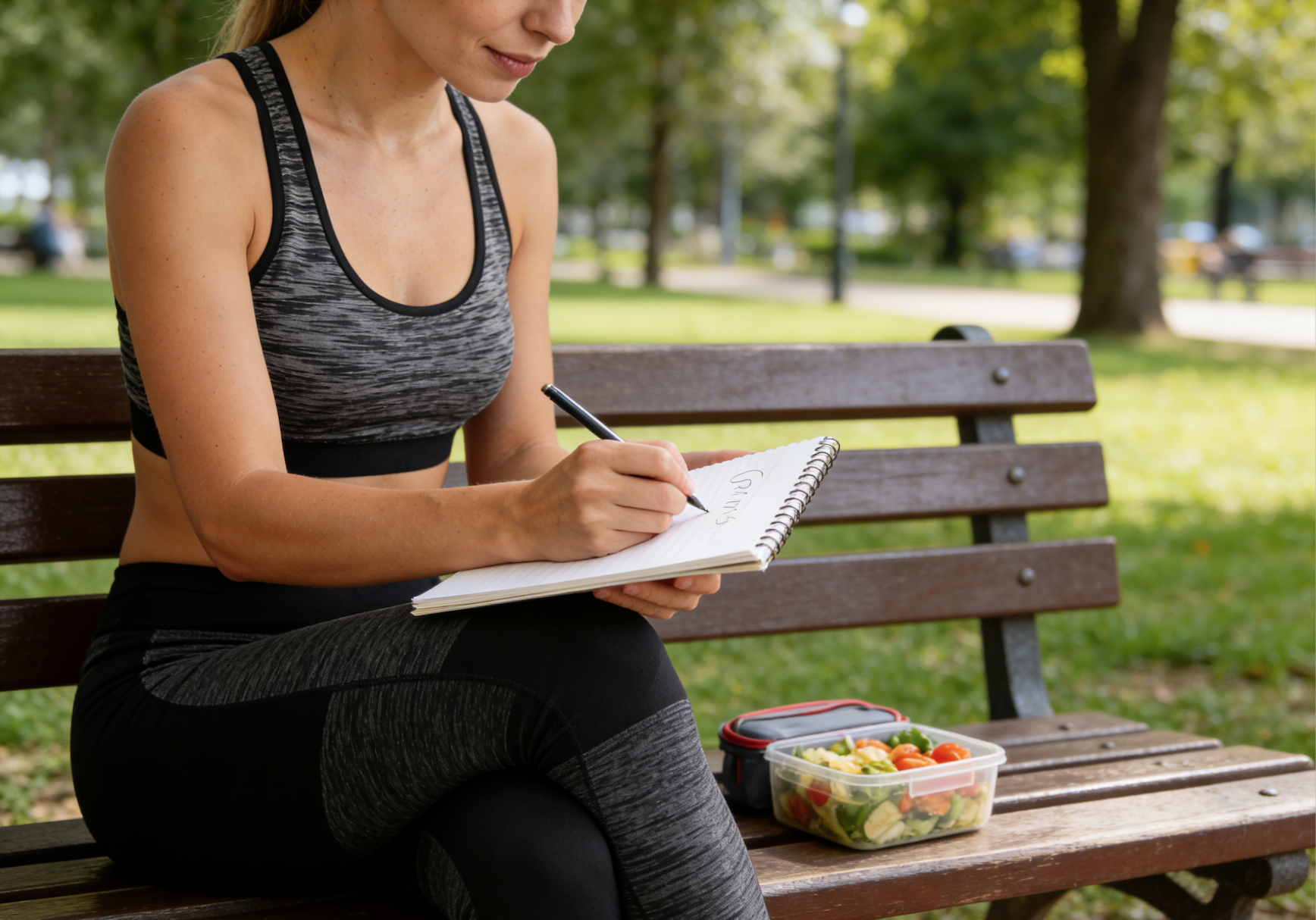
Analysis of the Three Core Principles of the Off-Ground Phase of the Documentation-Based Weight Loss Method
This article details the core principles of the "off-ground" phase of the calorie tracking method: mastering calorie calculation methods and establishing a daily tracking habit. Mastering this principle is crucial for scientific weight loss. This phase does not involve forced dieting; its aim is to lay a solid foundation for achieving long-term weight loss goals through cognitive adjustments.
2026-03-26
The Advanced Stage of the Documentation-Based Weight Loss Method: Analysis of a Three-Day Calorie Control Strategy
This article details the rise phase of the calorie-tracking diet, teaching you how to flexibly manage your appetite by controlling your total calorie intake over three days. The rise phase emphasizes an average daily intake of 1500 kcal, combined with drinking 2 liters of water daily to boost metabolism and achieve efficient weight loss. Learning the strategies for this phase will make your weight loss process more sustainable.
2026-03-26